Let me talk to you about my favorite towel of my entire life, Peshtemals. But I have to let you know, we’re not going to be talking about how plush it is. It isn’t the thickest towel. It isn’t the softest towel, but it’s still my favorite towel. And it’s for a number of reasons that you wouldn’t know unless you had these towels.
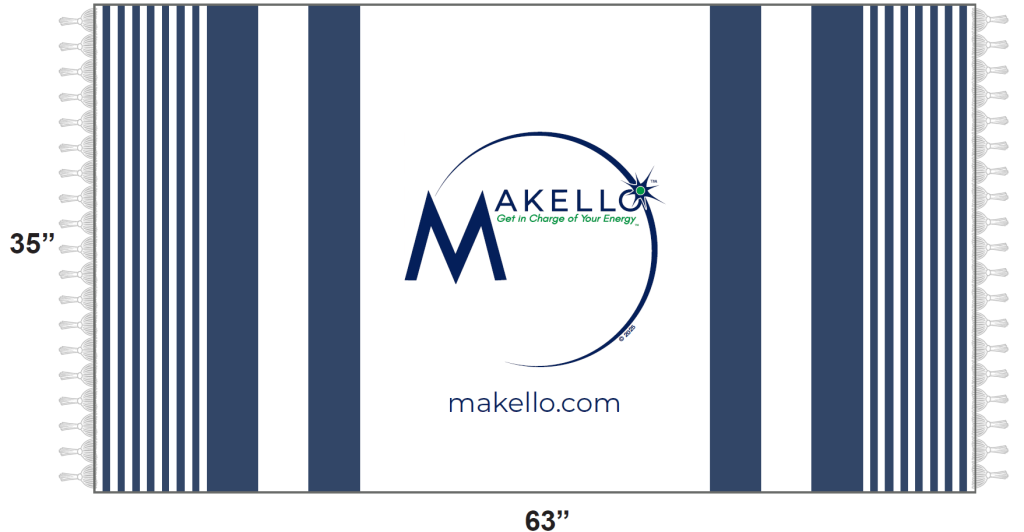
Peshtemals, also known as Turkish towels, or hammam towels, were created during the Ottoman Empire in modern day Turkey. They are thin cotton towels that are the perfect do-it-all towel for home use, beach use, gym/ spa, etc., and have become popular globally because of their functionalityand versatility.
Peshtemals are fast drying, packable and durable. The fabric is made using 100% Turkish cotton, regarded for its long fibers and softness, spun from manually operated looms in Turkey. The cotton is tightly woven, making it strong and highly absorbent without taking up too much space. The tightly spun fibers help repel sand and earth easier than other fabrics making it perfect for beach days or picnics. Their stylish designs make them perfect decorative pieces and furniture covers as well.
When you’re visiting someone’s house, the guest towels are sometimes the thickest, plushest towels, too thick to be useful. You wouldn’t take a thick plush towel to the swimming pool or the beach and put it down in the sand because it would pick up a lot of sand and grime in those thick plush fibers.
You’re already aware of a variety of towels and that certain towels serve certain purposes. Towels can be made of a variety of fabrics including cotton, cotton polyester blends, linen, bamboo, and synthetic microfibers. Cotton is common because it is soft and absorbent, linen is known for its durability, bamboo is prized for its sustainable softness, and microfibers are known to be quick drying.
Peshtemals are more hygienic
Doctors recommend that when drying ourselves off we pat ourselves dry rather than rub. With a plush towel, you can rub the thick sock fibers over your skin with some force to it. But you might not do that with a thinner towel because it might scratch your skin. If you’re not wanting to be abrasive, you would pat.
Doctors also recommend that we should be washing our towels after each use because dead skin and bacteria collect on the towel and grow when it’s hanging on the towel rack. We may be reusing the plush towel for days in a row and then try to dry it out between the days and that doesn’t work because it introduces new bacteria colonies to the skin. So instead of going that way and reusing thick towels, use these thin towels and wash them after each use – you can fit 2 to 3 times as many peshtemal towels in the washer!
Peshtemals are so convenient
You can take it anywhere! For example, in your carry on luggage, you can pack for about three or four days of clothes and towel for each day. You wouldn’t be able to fit four traditional bath towels and have any room left for your clothes. But you can take a peshtemal towel with you because it’s very lightweight. In fact, when I travel, I might take a whole week’s worth of peshtemals in my bag because I’m a swimmer. So I might swim two or three times on that three or four day trip. I might take four towels and clothes for three to four days, all in one carry-on bag. And you just can’t do that with any other towel.
Utility Cost Savings
Understanding your energy profile is critically important for being able to take control of your energy independence, so that you don’t have to buy too much solar or too much battery to get to your goal, and your energy profile is affected by usage such as washing your towels.
I’m sure we’ve all experienced over loading the washer with thick, plush towels to the point the spin cycle stops working and the towels are left just sitting in still water. We’re forced to run another wash cycle and sometimes the final spin cycle doesn’t ring out enough water and then we have to leave them in the dryer longer, increasing energy costs even more!
Plush towels increase the electric bill more, especially at times of the year when the solar power isn’t producing as much. If you’re running all this extra power to dry your laundry when it didn’t need to be that wet anyways, there’s an incredible amount of savings in changing your towels.
Instead of three plush towels, you can now wash up to 15 peshtemal towels in one load and the washer will not be overloaded. And when it spins dry, it’ll be much drier. And then the heat pump clothes dryer doesn’t have to go through as long a cycle.
Wanna FREE Makello towel? Come to Elementary Institute of Science, 608 51st Street, San Diego, CA 92114, on Oct 24, 2026 @ 11am-2pm.
When you Book an Appointment for Energy Analysis, and securely share your utility data, you’ll get a FREE Peshtemal Beach Towel: Full length, lightweight, compact, sand resistant weave, and water & energy efficient. Up to 15 towels per large washer!
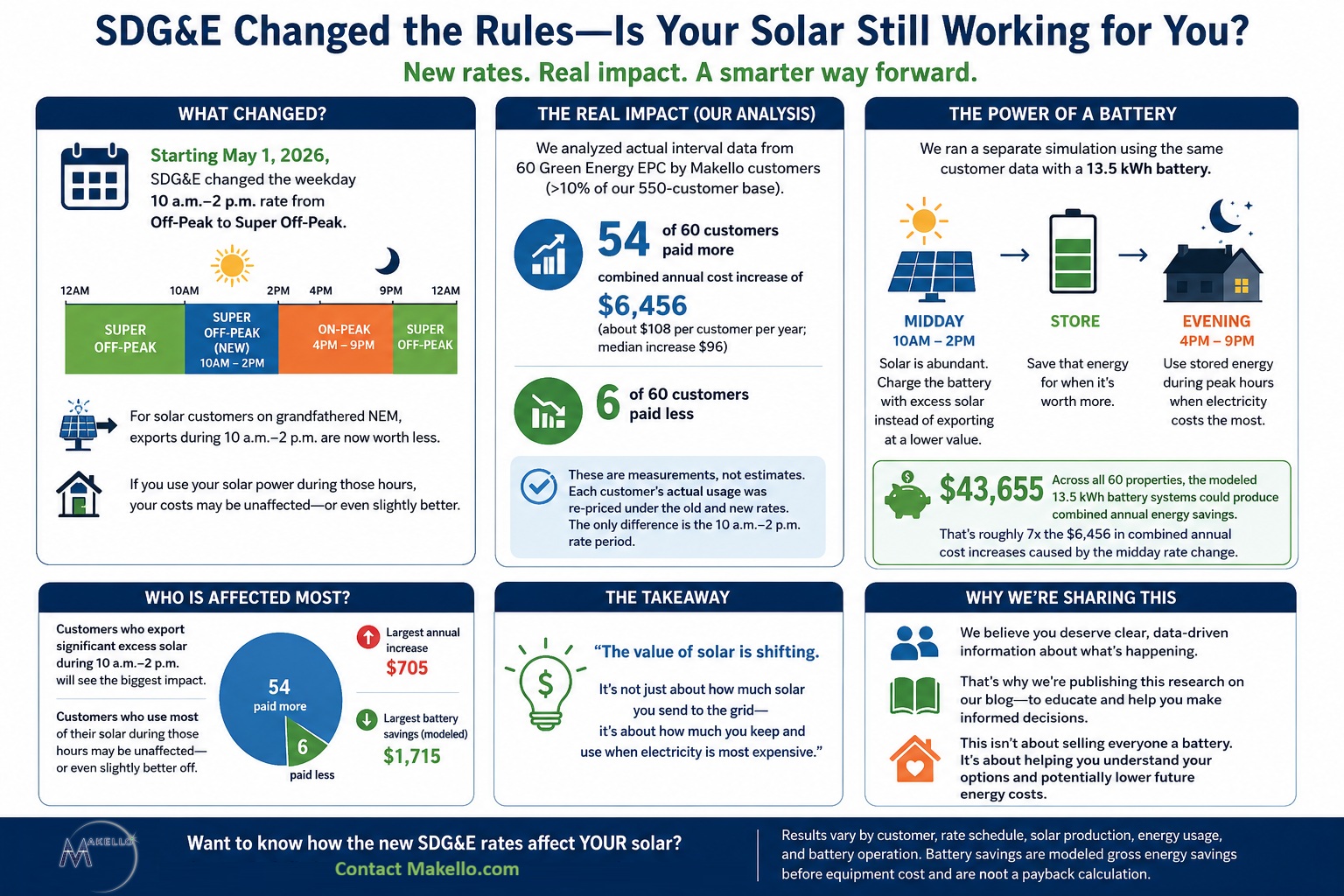
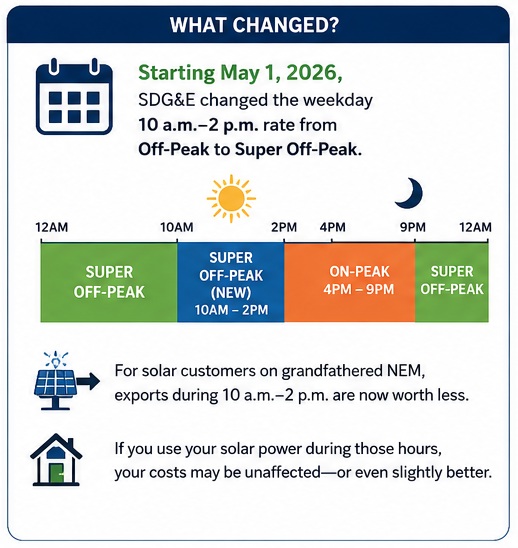
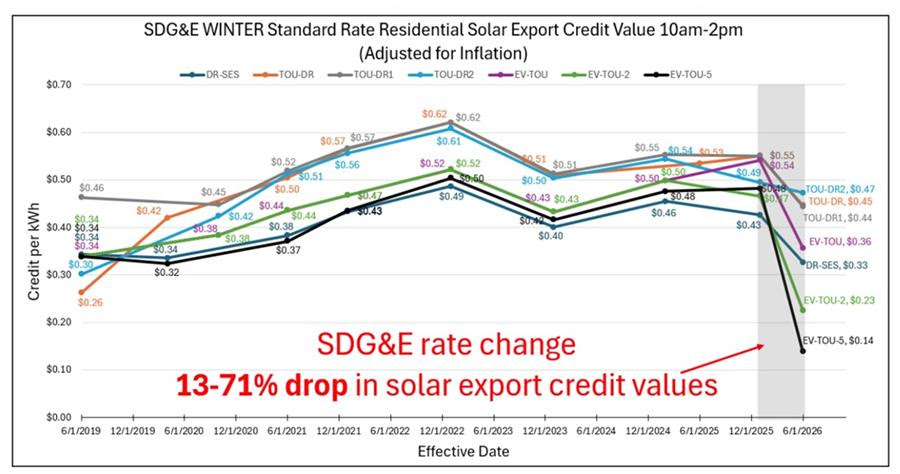
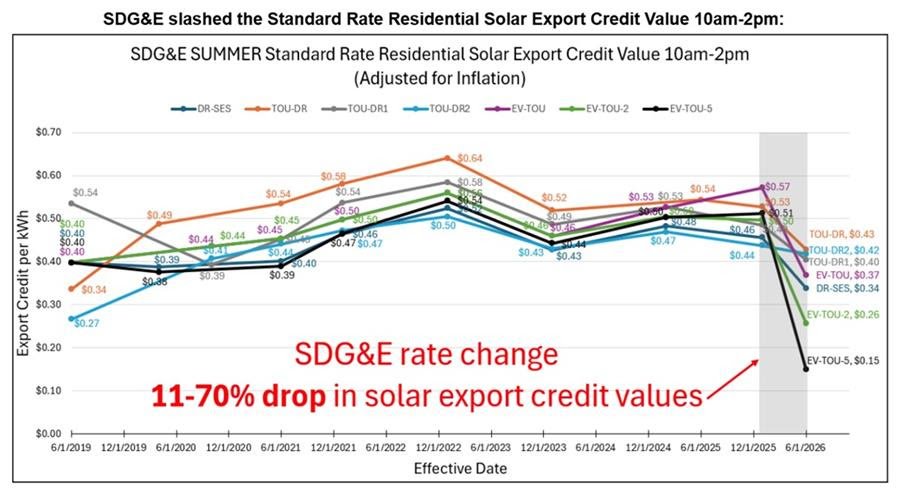
Effective May 1, 2026, SDG&E replaced the weekday Off-Peak rate with Super Off-Peak rate between 10am and 2pm year round. Previously those midday solar peak production hours were credited for Export to SDG&E at Off-Peak rate credit value, in every month except March and April. SDG&E On-Peak rate remains 4pm to 9pm. Weekends remain on the same Super Off-Peak rate as before during midday 10am-2pm.
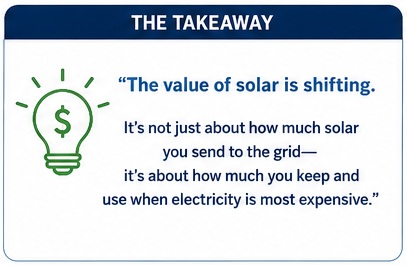
For a customer on grandfathered Net Energy Metering (NEM) tariff, moving the lowest cost Super-Off Peak rate to the peak solar production hours cuts the export value. Accounts with loads that consume solar power midday instead of exporting solar power to SDG&E, are unaffected or slightly better off, because the cost of importing electricity during those hours became cheaper.
SDG&E 10am-2pm Super Off-Peak Rate Change: Measured Impact Across the Customer Base
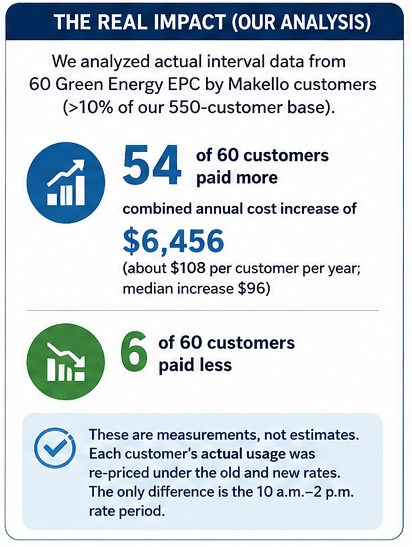
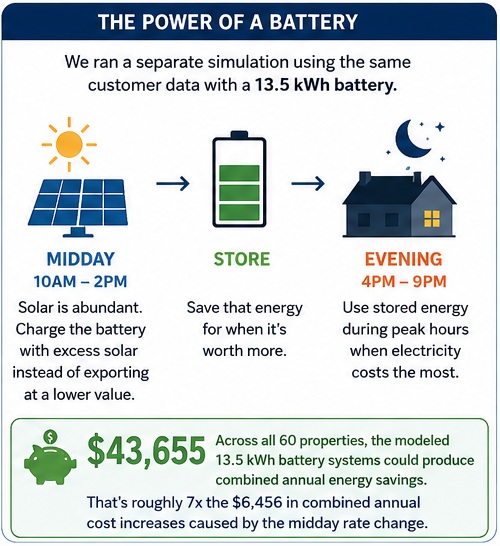
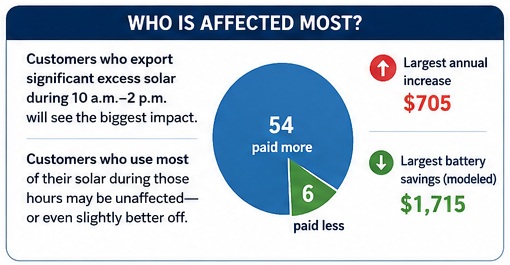
The Center for Community Energy and Makello.com analyzed 60 Green Energy EPC by Makello installed solar or solar-battery customer’s SDG&E metered interval data, which is slightly more than 10% of Green Energy EPC by Makello’s 550 installed customer base. Fifty-four of the 60 accounts analyzed will pay more because of the change SDG&E made on May 1, 2026, and only 6 pay less. The combined increase is $6,456 a year, however the same 60 properties would save $43,655 a year with the addition of a 13.5kWh battery, which is about 7 times the cost of the Super Off-Peak midday period change that decreased the Solar Export Credit Value.
How were the numbers produced?
Each premise’s own metered intervals were re-priced twice, once under the Off-Peak rate, and once under the Super Off-Peak rate. The electric load, utility rate and the solar or solar-battery system are the same in both runs. The only difference is which SDG&E rate the midday hours fall, so the difference between the two runs is caused by the period change and by nothing else. These are measurements, not estimates.
Under Net Energy Metering (NEM), each period’s net kilowatt hours (kWh) settles at that period’s generation rate. Delivery is close to flat across periods and earns no credit on export, so it is unaffected by the change and drops out.
Did SDG&E devalue your solar export credits in ‘Midday Super Off-Peak’ rate change? Find out: send a utility bill PDF, Interval data CSV to info@makello.com
The whole bill moves by the amount shown below.
Source
Number of Meters Measured
Number with higher SDG&E bill
Annual Cost Increase
Green Button
11
11
$1,253
UtilityAPI
49
43
$5,203
Combined
60
54
$6,456
The potential add-on battery figure is a separate simulation on the same interval data, for charging the battery from solar surplus, and discharging the battery against the 4pm to 9pm Peak Rate.
Annual increase for Existing Solar SDG&E Accounts
Number of Meters Measured
Annual Utility Cost Increase for 10am-2pm
Add-On Battery Annual Savings for 10am-2pm
Over $300
1
$705
$1,715
$200 to $300
4
$1,017
$4,653
$100 to $200
23
$3,265
$19,104
$50 to $100
20
$1,530
$14,269
Under $50
12
-$61
$3,914
Every measured meter, sorted by Annual Cost Increase
Customer
City
CCA
Schedule
Super Off-Peak rate change Cost / (Benefit) per year 10am-2pm
What the numbers say- Only midday exporters are hurt, making a battery even more useful
The median SDG&E increase is $96 a year and the mean is $108. Clean Energy Alliance(CEA) customers are hit harder per meter, on average $122 annual increase, vs $105 annual increase for San Diego Community Power(SDCP) generation customers. The reason for the difference between the two Community Choice Aggregators (CCA) is because the gap between Clean Energy Alliance’s(CEA’s) Off-Peak and Super Off-Peak rates is wider than the gap between San Diego Community Power’s(SDCP’s) Off-Peak and Super Off-Peak rates.
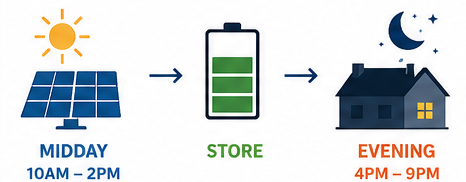
Only 6 utility meters are better off with the midday rate change, by as much as $150 a year, because they import or self consume at midday instead of exporting, so cheaper Super Off-Peak rate helps them. The dividing line is whether the array is sending excess solar power to the grid at midday, or otherwise that the electric loads are consuming the solar power. A battery is a load that absorbs the excess solar production and stores it for use later when utility rates are higher, or when there is a utility outage.
How each customer’s CCA was determined
The generation provider matters, since Clean Energy Alliance(CEA) and San Diego Community Power(SDCP) price the affected hours differently. The pricing difference was resolved two ways. First, the best resolution is reading the generation supplier from their own bills. From our sample data, forty-one of the forty-nine UtilityAPI meters’ intervals were read directly from the supplier named on their own bills. That is ground truth and needs no assumption. The remaining 8 were assigned by town, on the basis that Community Choice Aggregator(CCA) membership enrollment is automatic and only 1%-2% of customers choose to opt out.
The town to CCA map was derived from the bills of the other customers rather than from general knowledge, then checked against the identified customer. Cross checking the data this way caught two errors. The word Vista appears inside Chula Vista, which would have put seven San Diego Community Power customers into Clean Energy Alliance. Escondido turns out to be genuinely mixed, with both suppliers serving different Escondido addresses in the bill data, so the Community Choice Aggregator (CCA) cannot be reliably assigned solely by town name. Escondido and Vista addresses default to SDCP if billing information is not available, which produces a more conservative result.
Data that was excluded from our sample and why
Nine meters were not included in the analysis. Five meters did not have any interval data. Two meters did not have a resolvable supplier or a recognisable town indicated on their interval data. One meter is served by a third party rather than a CCA so these rates do not apply, and one meter was a duplicate.
Additionally, twenty solar exporters are on tiered or two period schedules that the recent SDGE Super Off Peak Hours change does not impact. Two solar exporters are on tariffs that could not be classified. Where a premise had several meters over time, through a meter change or a replacement, only the most recent was counted. For example, three different meters over time at one address would otherwise have counted that customer three times.
Analysis Assumptions
Whenever the numbers above are quoted we used annual netting rather than monthly banking with a true up. With regards to the battery impact, battery dispatch is a simple rule, charge from surplus and discharge against the on peak window, so it is a working figure rather than an optimised one. Delivery is treated as flat across periods, which the bills support. Battery savings are gross energy savings before equipment cost, so they are a savings side and not a payback. Where a customer’s interval history is shorter than a year, we scaled the result to a year, and the number of days behind each figure is in the underlying data.
Key Takeaways
California has the enviable position of producing so much excess solar at noon that there often aren’t enough loads to utilize the solar production being pushed out to the grid. Switching from a spinning the meter backwards to earn credits mindset to using a battery to capture excess production and discharge the battery during on-peak periods can be a game changer for solar customers now that those midday export credits have been devalued.
The goal is no longer to indiscriminately export excess to the grid during high solar production periods but rather to utilize energy storage to hold excess production onsite and discharge the battery during the periods of the day with the most expensive rates with onsite loads prioritized before excess is exported to the grid.
Thank you, Jose and Center for Community Energy, for the excellent research and analysis!
How much did SDG&E devalue your solar export credits in ‘Midday Super Off-Peak’ rate change? Find out: send a utility bill PDF, Interval data CSV to info@makello.com
SDG&E Changed the Rules – Is Your Solar Investment Losing Value?
If you invested in solar power to lower your electric bills and gain more control over your energy costs, there’s something you need to know:
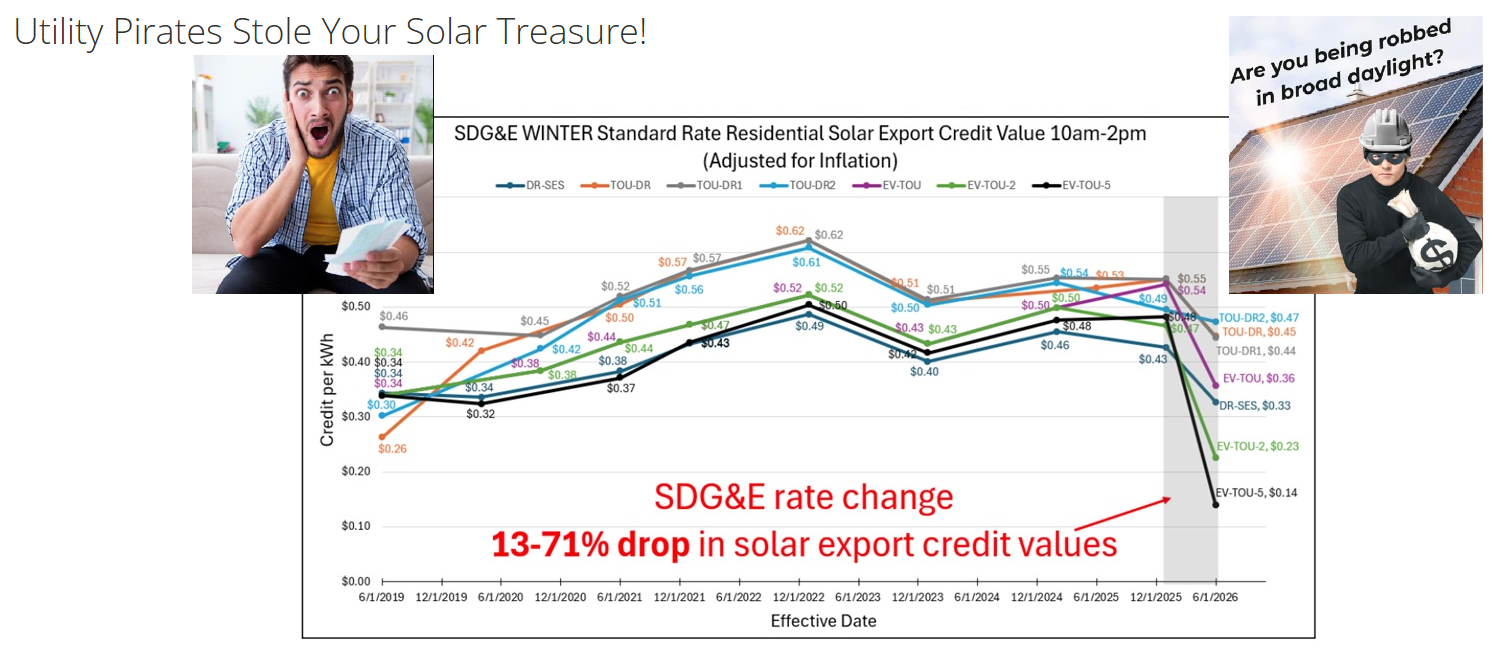
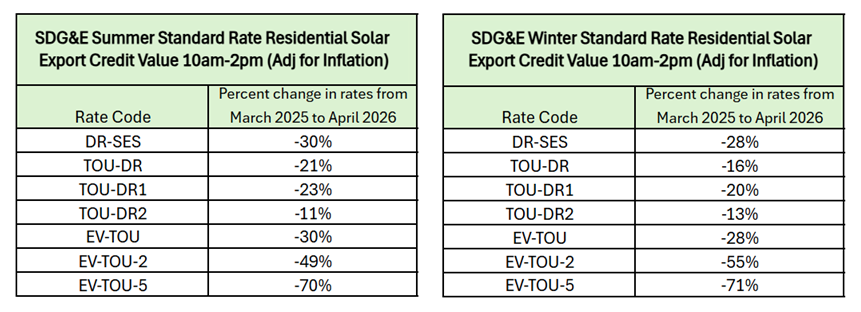
Your solar panels produce the same clean electricity as always. What’s changed is the solar export credit value just dropped 11%-71% during peak solar production hours, making a battery even more useful.
With SDG&E’s newer time-of-use rate plans, the excess solar energy you send to the grid during the peak solar production hours of the day is worth far less than electricity you buy back during expensive evening and morning hours.
So while your solar system may be performing as expected, many owners are finding their savings aren’t what they used to be and bills went up!
If you are interested how the rate change may affect you, send us your utility interval data and a pdf of your most recent bill. A video with instructions can be found here or a written guide can be found here.
The Rules Have Changed
Utilities can change rate structures—even after you’ve invested in solar.
That means the value of your solar overproduction credits can shrink while the cost of buying electricity later in the day continues to rise.
“If my solar is producing the same energy, why are my bills increasing?”
Keep More of What You Produce
The solution isn’t necessarily more solar—it’s using more of the solar energy you already generate. Run the loads during the solar production hours and add energy storage for the loads that must run after 4pm.
A battery stores your excess daytime production so you can power your life during expensive evening hours instead of purchasing electricity from the grid.
The more solar energy you use, the less you’re affected by utility rate changes.
Protect Your Investment
Your solar investment is still valuable – but today’s rate structures reward owners who maximize their own energy use.
Produce it. Store it. Use it yourself. If you don’t have battery, get it now!
That’s how you keep more of your savings—and more control over your energy future.
Don’t let changing utility rates determine the value of your investment. Keep your treasure where it belongs—with you.
If you own a business and work from home, your solar and battery installation may qualify for significant federal tax credits and rebates.
Many business owners don’t realize that the business-use portion of their home can unlock commercial clean energy incentives through the federal 48E tax incentive structure, potentially allowing them to claim a substantial percentage of the system cost.
How Business Use Qualification Works If part of your home is used for business purposes, the solar and battery system may qualify proportionally based on either:
● Square footage used for business
● Percentage of total energy use attributed to the business
This means business use may qualify for up to 78% solar-battery incentives proportionally, depending on your tax structure and eligibility.
For example: If 40% of your home’s energy use supports your business operations, your eligible incentives may apply to that 40% business-use portion.
Incentives for Non-Profit Organizations Eligible non-profit organizations may qualify for: Federal Incentives
● 30% Solar Tax Credit (as a rebate)
● +10% Domestic Content
● +10% Energy Community
Total Potential Benefit Up to 50% Rebate × Business Use % This can significantly reduce upfront costs for qualifying churches, schools, charities, and other nonprofit entities operating from owned properties.
Incentives for For-Profit Organizations Eligible for-profit businesses may qualify for: Federal Incentives
● 30% Solar Tax Credit
● +10% Domestic Content Tax Credit
● +10% Domestic Content Tax Credit
● +15% to 28% Depreciation
● Based on tax filing category
● Gross income
● Depreciation method used
Total Potential Benefit Up to 65%–78% Tax Credit × Business Use % This makes solar + battery systems one of the most powerful tax-advantaged investments available for business owners.
Who May Qualify? Home office or business-related usage on a residential meter may qualify if the business generates income from one of the following:
● Self-employed individuals reporting business income on Schedule C
● Independent contractors
● Sole proprietors
● Single-member LLCs taxed as sole proprietorships
● Partners in partnerships (subject to specific rules)
● S-corporation shareholders (via corporate accountable plan reimbursements)
Important Note A remote employee working from a home office cannot claim Business Use deduction. However, an employee-owner may qualify depending on structure and reimbursement setup.
How to Reserve Federal Tax Credits
To qualify for Federal Income Tax Credits and Depreciation for Business Use:
Option B Pay a $1,000 Down Payment and install by December 31, 2027.
These timelines may help preserve eligibility under current federal incentive programs.
Why This Matters Solar + battery systems are no longer just energy upgrades—they are strategic financial tools. For business owners working from home, the right system structure may deliver:
● Lower utility costs
● Backup power security
● Major federal tax savings
● Accelerated depreciation benefits
● Improved long-term property value
Understanding your business-use percentage can make a major difference in total savings.
Disclaimer: Makello.com and Green Energy EPC by Makello, Inc. are not tax experts. This article is for informational purposes only and is not tax advice. We cannot guarantee incentive acceptance, fund availability, or final incentive amounts. Please consult your CPA or tax professional regarding your specific eligibility for business-use solar incentives on residential or commercial properties.
Safe Harbor for Solar & Battery Incentives in 2026: What Owners Need to Know
If you’ve been thinking about adding solar or battery storage to your property, 2026 brings a mix of opportunity and urgency. The landscape has shifted significantly over the past two years, and understanding what’s changed could make a substantial difference in your long-term savings.
The Big Change: Tax Credits in 2026
● Residential personal-use 30% solar and battery tax credits ended in 2025.
This means both commercial properties, and residential properties where homeowners who can legitimately classify part of their energy usage as business-related, such as a home office, rental activity, or EV used for business, may still qualify for meaningful incentives.
Why Timing Matters
There is a critical window to act. Contracts signed and a minimum of 5% Safe Harbor fee received before July 4, 2026 may still qualify for incentives, even if adjustments are made later through change orders. This gives owners flexibility while locking in potential financial benefits.
Exploring Your Options in Residential Business Use
Every home and energy setup is different, but most scenarios fall into a few categories:
● NEM Expansion (e.g., 3-module add-ons) Ideal for homeowners looking to expand an existing system without losing the cost savings from a grandfathered utility rate.
● Solar + battery combinations Increasingly popular due to rising electricity rates and grid instability.
● Battery-only installations A strong option for homes already equipped with solar.
Within each of these, eligibility and savings can vary due to several factors.
Here are some examples of common scenarios for comparison:
● Whether the system is designed for backup power vs. cost savings
Battery Systems: A Growing Trend
While the solar market has slowed, battery adoption is accelerating. Homeowners are prioritizing energy independence and protection against outages.
It’s also worth noting:
● A battery designed purely for cost savings can be $4,000–$6,000 less expensive than a full backup system.
● Battery installations are more complex, requiring more labor, which affects pricing and margins.
Market Reality: A Volatile Few Years
The solar industry has experienced major turbulence:
● Equipment prices have fluctuated due to tariffs, inflation, and supply chain disruptions
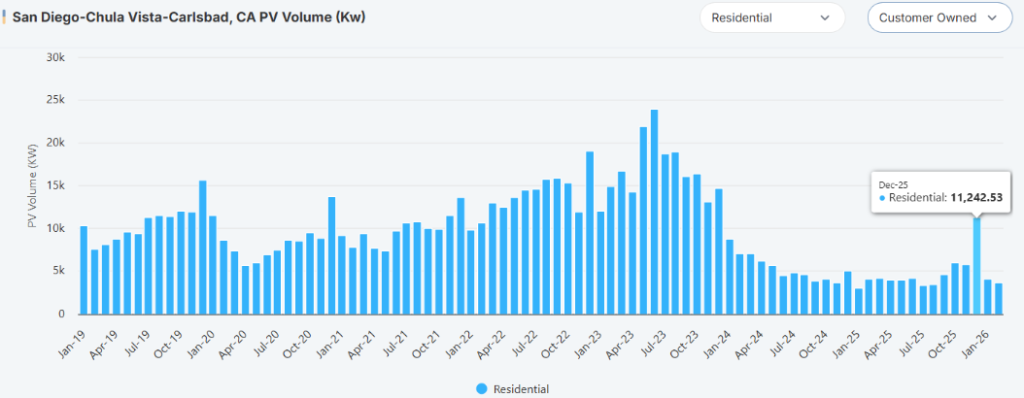
● The market saw a sharp contraction in 2024–2025, with many companies shrinking or exiting
● 2026 is shaping up to be one of the lowest-volume solar installation years in recent history
Credit: Ohm Analytics dashboard marketplace
At the same time:
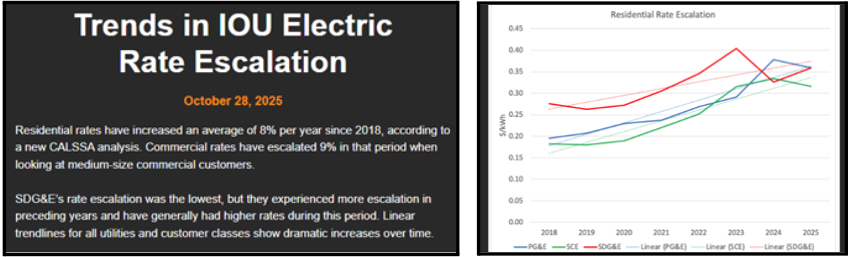
● Electricity rates have increased ~8% annually since 2018, doubling roughly every 7–9 years depending on rate structures
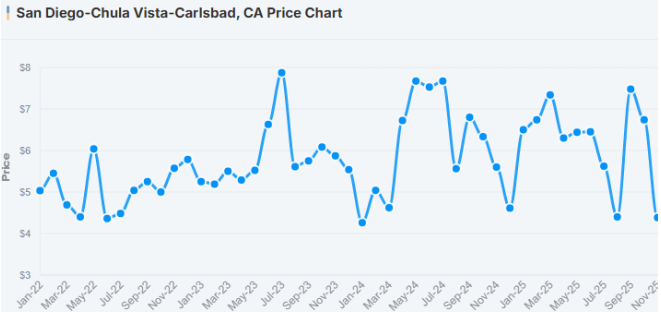
● The average solar PV cost/watt in 2025 ranged from $4.50 to $7.50 per watt, with regional averages around $6/watt, due to the 1kW CEC-AC add-on NEM Expansion limit.
Credit: CALSSA member newsletter. Click to become a CALSSA MemberCredit: Ohm Analytics dashboard marketplace
What This Means for You
Despite market uncertainty, the fundamentals still favor energy investment:
● Utility rates continue to rise steadily and SDG&E is already the highest cost utility power in the U.S., at $0.91/kWh Peak Rate (EV-TOU).
● Battery adoption is increasing due to real-world reliability needs
● Incentives still exist—but are now more nuanced and tied to usage type
The key question is no longer just “Should I go solar?” but rather: “How can I structure my system to maximize savings under current rules?”
Final Thoughts
2026 isn’t the easiest year to navigate solar decisions—but it may be one of the most strategic.
If you’re considering solar or battery:
● Evaluate whether any portion qualifies as business use
● Understand your rate plan and energy consumption patterns
● Act before key deadlines to preserve eligibility
The opportunity hasn’t disappeared—it’s just become more tailored.
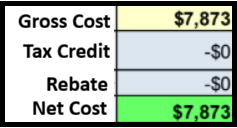
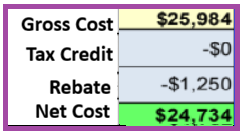
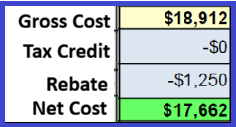
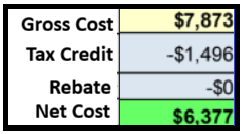
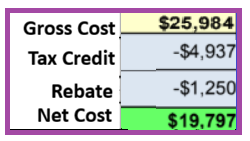
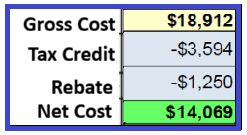
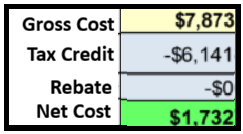
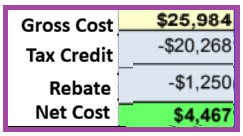
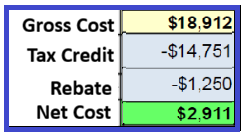
There’s a variety of options available for Residential Business Use NEM Expansion, for existing solar. Green Energy EPC by Makello, Inc has many hundreds of Current Customers with Net Energy Metering registrations that are eligible for an Alumni Discount. Click on the option that best matches your add-on Solar Only, Solar-Battery, or Battery Only NEM Expansion cost summary, to see a contract that is available for you to fill out, sign and return by May 1, 2027. Of course, Makello.com will be glad to help you through the process.
Solar Only
Solar & Battery
Battery Only
0% Business Use
25 % Business Use
100 % Business Use
Remember you have until 2030 to build. You only need to pay a minimum of 5% before July 4, 2026 to Reserve your Solar Tax Credit and Depreciation incentives!
You are working a solar company and they have a lot of questions to determine the optimal system size that best matches your energy goals. Now you’ve been asked to download your SDGE Energy Usage data. There’s Green Button Data, Utility API Authorization, Two-Factor Verification or any other number of options. What do you need to do and how do you do it?
At Makello, we request either downloading Green Button data in 15 minute intervals from your SDGE account or to authorize Utility API collection of data on your behalf and this article will focus on those methods.
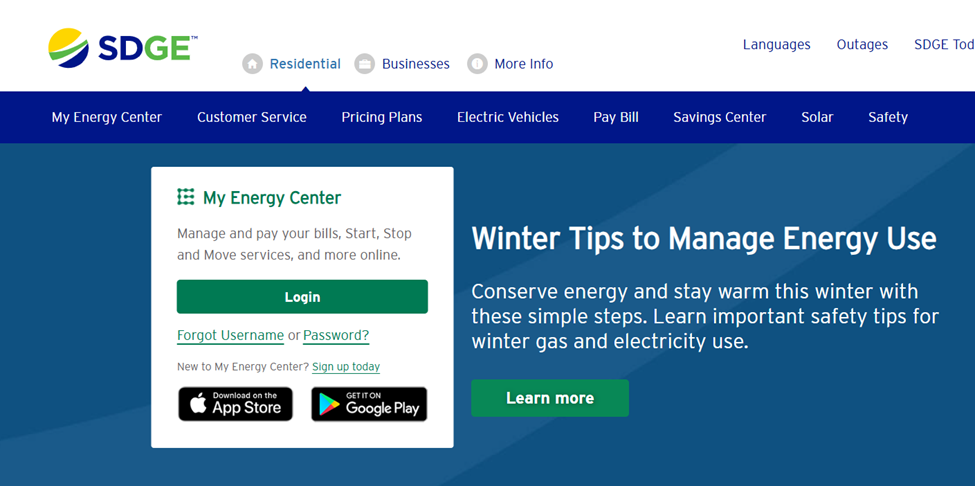
The first step to downloading your interval data from SDGE My Energy Center is to navigate to https://www.sdge.com/
Click on Login in the home page if you have already set up an online account to view your SDGE bills. First Time Users of SDGE My Energy Center should click on Set Up Today and follow the steps to register. You may have to login after registration. If you have two factor authentication activated, you will be asked to enter in a code that is sent to the email or phone number you have on file.
Green Button Data Download
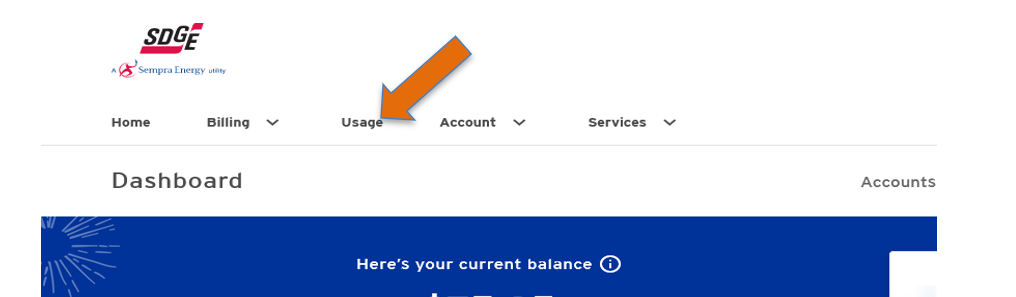
After successful log in, you will see your dashboard. The dashboard design may vary due to your enrollment in a Community Choice Aggregator or not.
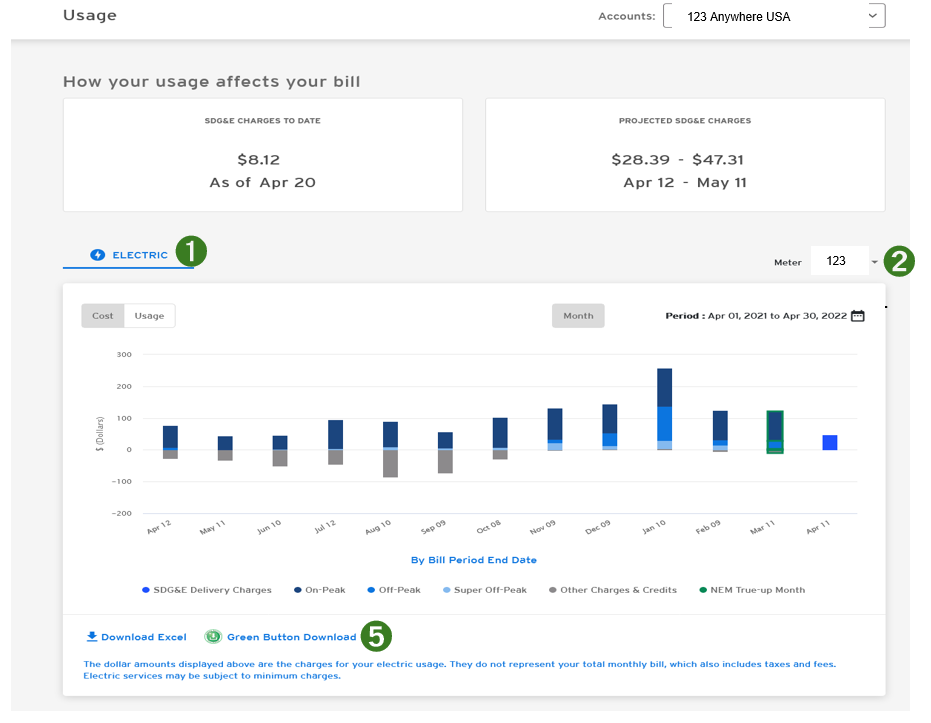
Click on the Usage tab at the top of the dashboard.
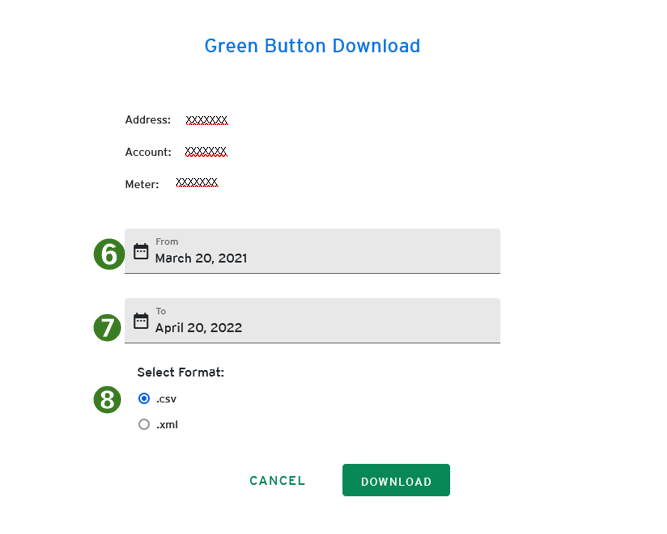
You can download your data from your Usage page. 1. Select Usage from the drop down menu in the Usage Tab. 2. Select your electric Meter from the drop down menu on the right side of the page. 3. Scroll down to the bottom of the page. 4. In the bottom left corner, you will see button for Download Excel and Green ButtonDownload. 5. Click on Green Button Download to download data.
6. Set the date in the drop-down tab to download as many months of data as possible. Twelve (12) full months of data is preferred but one month of usage data is needed if available. 7. Under the Select Format heading, click .csv button (this step applies to electric meters only), then click download. 8. Under the Select Format heading, click .xml button, then click download (this step applies to both gas and electric meters for customers with both types of meters). 9. Repeat steps 1-8 for each meter that services the property, gas and electric.
Turning SDGE Two Step Verification Off or On
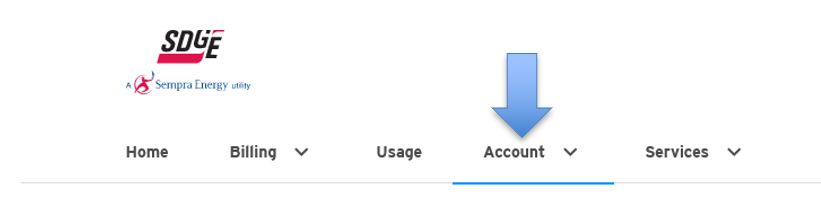
Turn 2 Step Verification off or on by clicking on Account in menu bar.
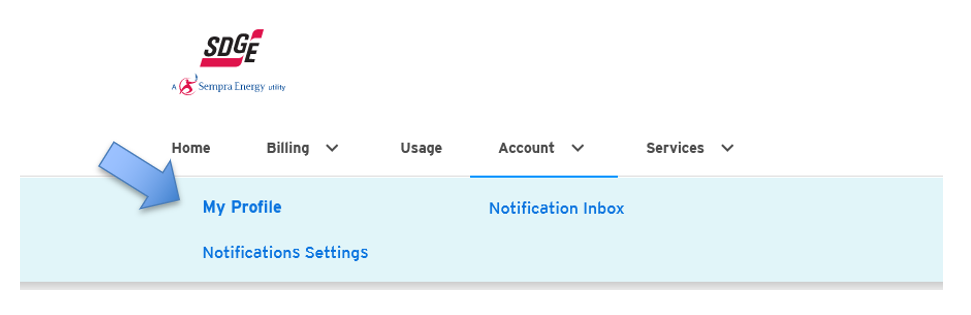
Then select My Profile from the drop down menu.
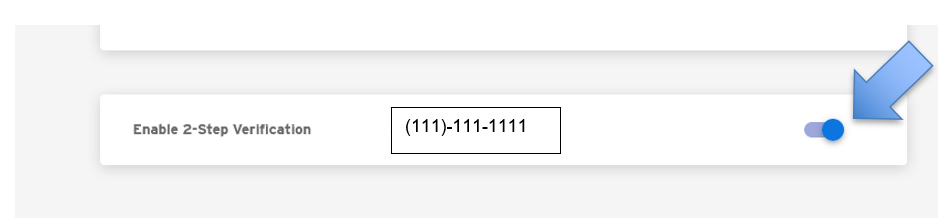
Scroll to the Enable 2-Step Verification section and click on the blue button on the right side of the screen to turn off the 2 Step Verification.
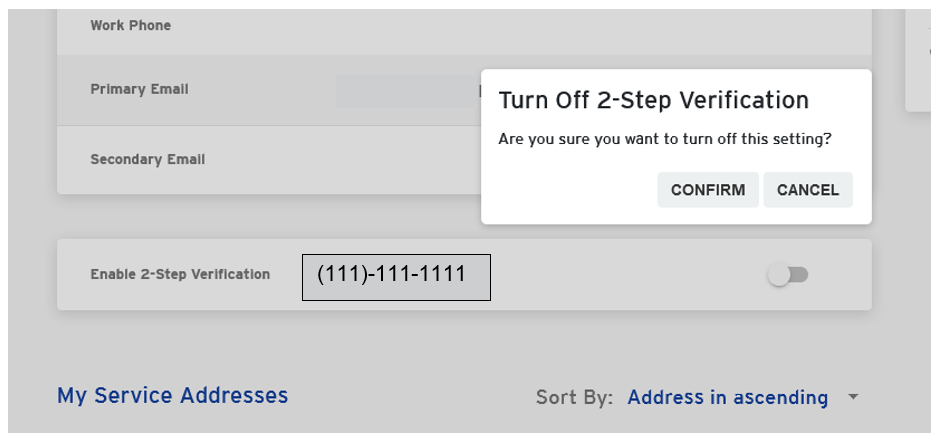
Click on Confirm in the pop up menu.
You have turned off the 2 Step Verification. Please note: 2 Step Verification must be completed prior to authorizing Utility API data collection.
To Turn 2 Step Verification back on, simply return to your Account, select My Profile, scroll down to Enable 2-Step Verification and click on the grey button on the right side of the screen, click on Confirm.
Authorization of Utility API Data Request via Link
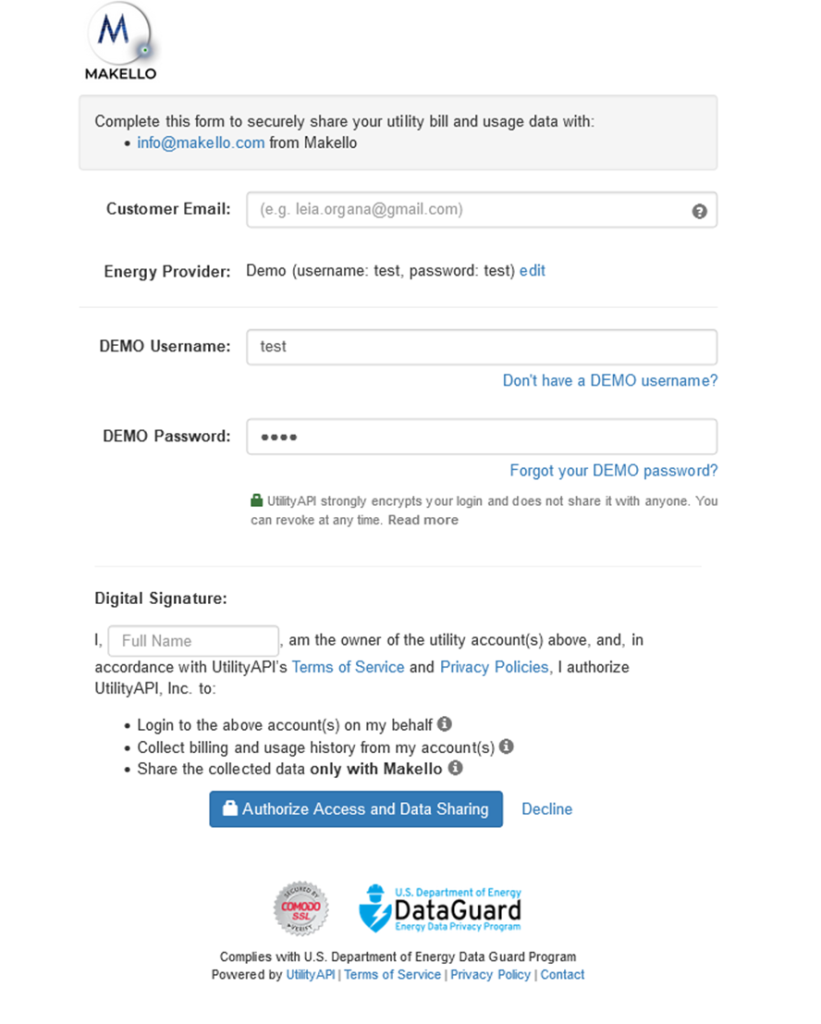
Please click on the Utility API Authorization link provided by Makello in the email you received.
You should be brought to a screen similar to the picture below. Please provide the requested information and click Authorize Access and Data Sharing.
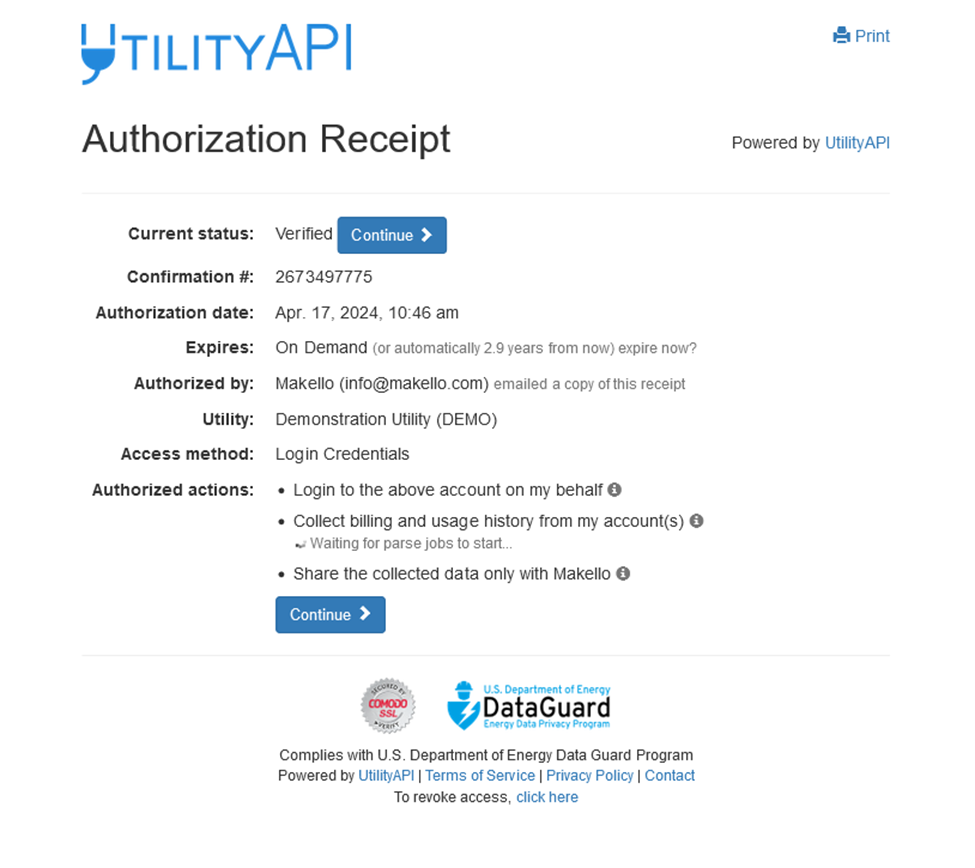
You should receive an authorization receipt similar to the picture below after authorization has been completed.
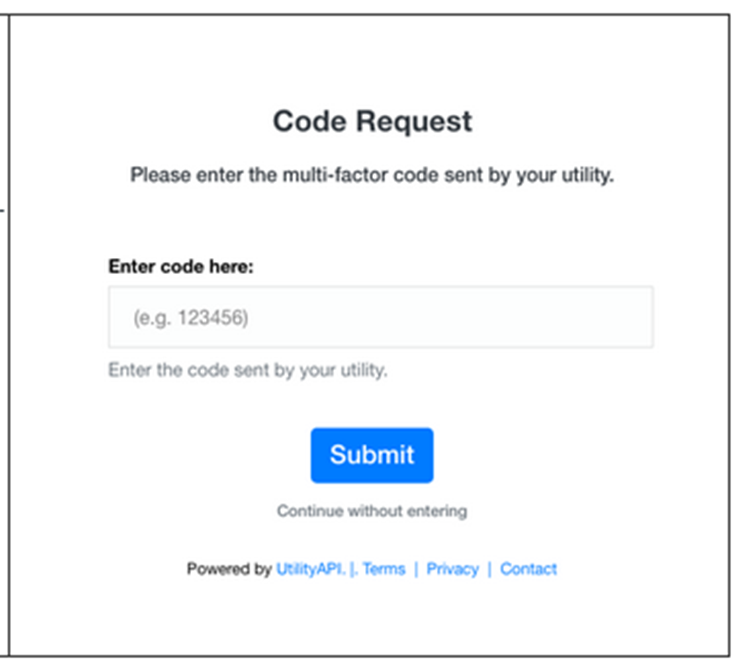
If your SDGE account has two-step verification, you should then receive a two-step verification code from SDGE sent via text message. Please enter the code in the space provided. An example of the screen where you enter the two-step verification code provided in the image below.
Alternatively, you may manually deactivate and reactivate the multi-step verification for your SDGE by following the steps previously outlined.
Please note: 2 Step Verification must be completed prior to authorizing Utility API data collection.
Utility API Data Collection Refresh Historical Data
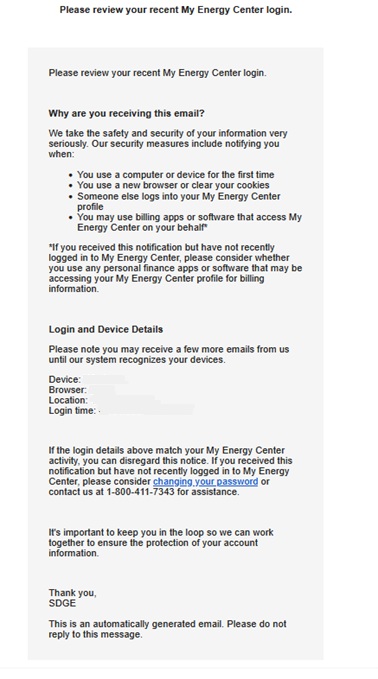
When Utility API Refreshes Data via a new collection, you may receive a message informing you of the activity on your account.
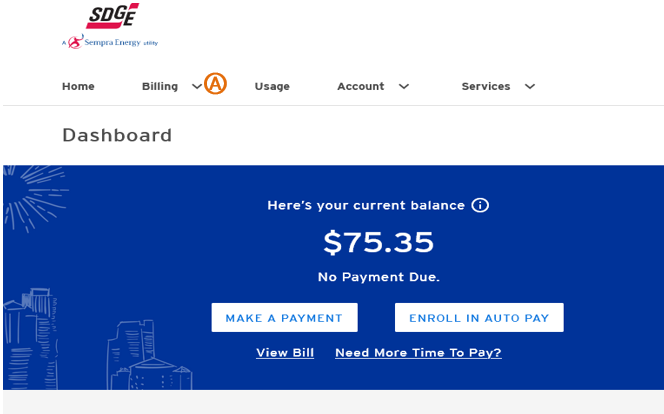
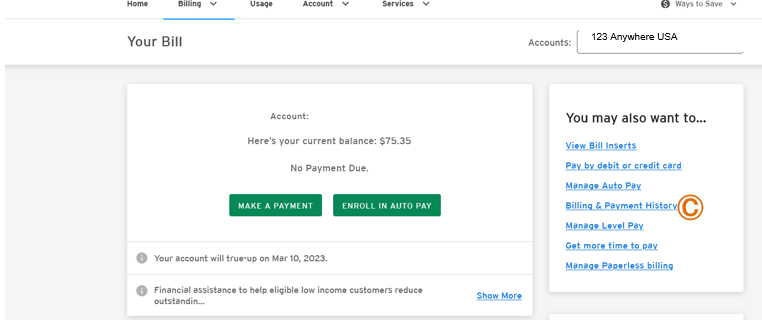
A. Click on Billing drop down menu at the top right of your dashboard.
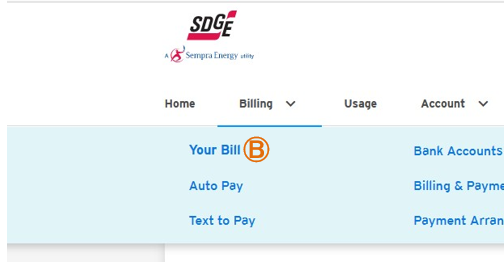
B. Click on Your Bill from the Billing drop down menu.
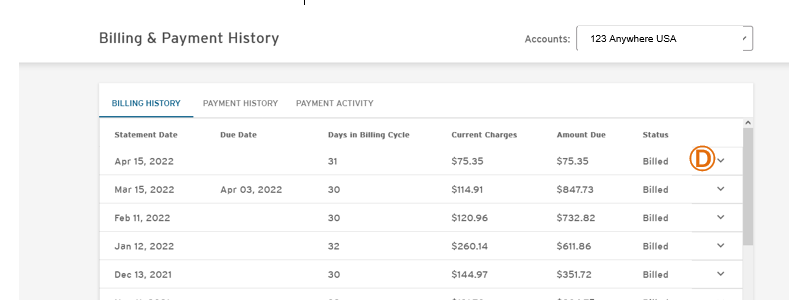
C. Click on the link for Billing & Payment History from the menu on the right side of the menu.
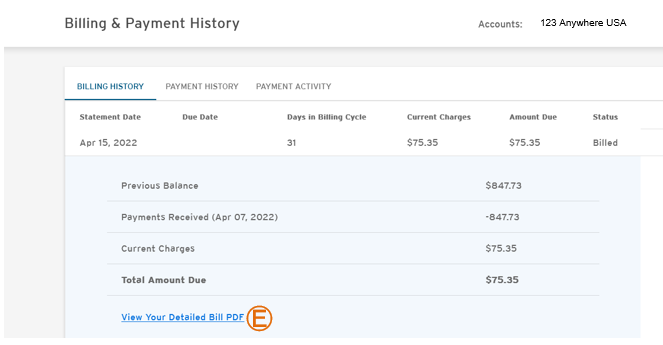
D. Click on the drop down menu arrow on the right side of the screen to display your bill.
E. Click on the View Your Bill PDF link.
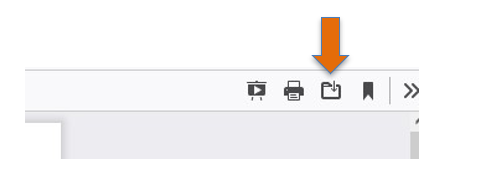
F. Click on the folder icon on your computer’s menu bar to download the file. Save the .pdf file to the folder of your choice.
G. Return to the Billing & Payment History Screen and repeat the download process detailed in steps D-F for as many of the most recent months of Bills available, up to twelve (12) months of Bills.
However, CPUC Decision 25-12-003 impacts the SGIP Rebate Program significatnly on December 31, 2025. SGIP ratepayer incentive budgets are closing for new ratepayer application submissions including applications being submitted for the waitlist in the following budget categories:
Large-Scale Storage
Small Residential Storage
Residential Solar and Storage Equity – Ratepayer
Non-Residential Storage Equity
Equity Resiliency
Generation
December 20, 2025 is the last day to press the “submit” button for the incentive budgets listed above.
Ratepayer funding allocations discontinues after 2025. Applications in a “Waitlist” status on December 31, 2025 face cancellation.
Please reach out to SCE, CSE, PG&E, or SoCalGas if you have any questions regarding the changes to the SGIP Program. You may find program administrator contact information at https://www.selfgenca.com/home/contact/
Small gas powered landscaping equipment such as leaf blowers and lawn mowers create a lot of noise and pollution. According to the California Air Resources Board (CARB), operating a gas powered lawn mower for one hour emits the same amount of smog-forming pollution as driving a 2017 Toyota Camry 300 miles from Los Angeles to Las Vegas. That is pretty remarkable but the emissions from a leaf blower are even more astonishing. CARB published using a gas powered leaf blower for one hour emits the same amount of smog-forming pollution as driving a 2017 Toyota Camry 1,100 miles from Los Angeles to Denver. CARB states the number of these small engines operating in California is 16.7 million which is greater than the number of light-duty passenger cars. The amount of pollutants emitted from the small gas powered engines rated at or below 19kW is being addressed and included in the emissions reduction plans.
Makello’s Ethical Energy Savings Report is the result of a detailed trade-off study of discount utility rates, Community Choice Aggregation options, grants, rebates, tax credits, and equipment options, to determine the fastest payback and highest return on investment, to meet your home, business and vehicle energy needs.
The program addressing emissions reductions is the California Clean Off-Road Equipment Voucher Incentive Project (CORE) https://californiacore.org. CORE is authorized by Senate Bill 170 (SB170) and funded by California Cap and Trade Investments. The program provides incentives for users of small off-road equipment to adopt zero emission equipment. Some examples of equipment being incentivized are: Leaf blowers and vacuums, Chainsaws, String trimmers, Edgers, Hedgers, Walk-behind/ Ride-on mowers.
The CORE program provides point of purchase vouchers and funding is capped at $25,000 per eligible purchaser. Eligible equipment must be listed in the CORE eligible equipment catalog and purchased from a CORE approved dealer. CORE program allows the stacking of funds but other programs may not. At any rate, stacking funds must not exceed 100% of equipment cost.
Program funds are distributed on a first come first serve basis until funds are no longer available.
In our blog post “Greenbacks for Green Tech, Cash Back for San Diegans”, we discussed incentives facilitating the adoption of energy efficient technologies for owners of residential buildings and vehicles. SD-Sequel http://sd-sequel.org reached out to us and thankfully brought to our attention rebates available for small and micro sized landscaping businesses.
HOA managers often have an onerous time when preparing new budgets as costs to run the HOA increase but the Board doesn’t want to raise assessments. Investigating whether the HOA has energy zombies or phantom loads is a clever way to reduce energy costs and maintain the bottom line on the budget. It is also a great thing to do before starting a solar system capital improvement project.
What can an HOA do to reduce common area electric usage? HOA developments can vary widely in structure and amenities so we will cover a few general energy efficiency options that often apply to HOAs.
Are you ready to save money? Get a custom energy savings report fromMakello.
First on the list is to find the energy zombies and identify phantom loads by conducting an Energy Treasure Hunt. To conduct an Energy Treasure Hunt, teams of treasure hunters can walk the common area looking for ways to save energy. Materials and instructions are available at https://www.energystar.gov/buildings/save-energy-commercial-buildings/ways-save/treasure-hunts This can be a community building project for resident volunteers or you can hire Makello to perform the energy savings analysis for you. Where can the Treasure Hunters find the Energy Zombies and Phantom Loads?
Does the HOA have a pool? Are the pumps functioning properly? Pumps need proper maintenance and to be set at the right speeds to effectively filter pool water. Pumps not working correctly or efficiently can waste energy and run up electric bills. If it is time for a pool pump replacement, look for Energy Star Rated variable speed pumps. Another way to save energy for pool pumps, besides installing a solar system to run your pool pumps, is to install a timer and run your pumps only when the pool is in use. Most HOAs aren’t open 24/7 so it may be possible to stop the pumps when the pool is closed. Please check with your pool maintenance professional to ensure your pool is functioning properly and meets health and safety requirements.
Solar system with room for several picnic tables underneath. Installer:Green Energy EPC, Sales: Makello
Yes, we did just say you can install a solar system to run your pool pumps. Pool pumps are powered by electricity and are able to reliably run on solar power just like other electrical equipment. You can install solar to power your pool pumps even if you don’t have a pump room or community room with a large roof. Solar and pools are a 2 for 1 common area upgrade. Solar modules can be installed on a patio cover type structure and a covered seating or picnic area near the pool is created in the common area under the solar modules while the solar modules power your pool pumps. What a great capital improvement project for the HOA residents.
Let’s talk about lighting. Lights in HOA common areas are an essential part of safety and well designed lighting can enhance the quality of life and value of a property. Electric costs for common area lights may eat up an HOAs assessments. A lighting survey can help cut costs by analyzing the number and types of lights in use and evaluate the effectiveness of the lighting then implement energy saving measures.
There have been a number of improvements in lighting options that can help protect the bottom line in the HOA budget. LED bulb options are available for every fit, form and function, in a variety of fixtures, to replace less efficient bulbs. Switching to LEDs can reduce power consumption by up to 50% when replacing fluorescent lamps, and by up to 80% when replacing Incandescent/Halogen lamps. Lower total consumption and lower instantaneous peak use can trigger a change to a discount utility rate, and save even more money in avoided solar, battery, electrical and utility integration costs.
Solar outdoor light fixtures are available in a variety of styles. The fixtures are often a self contained unit with LED bulbs in a wide range of sizes and last for several years. Many fixture options include motion sensors which switch the light on and off as needed to preserve the battery charge and eliminate the need to fuss with timers.
Light bulbs aren’t the only lighting upgrade option. Sensors on light fixtures are capable of turning your lights on and off when the light is not needed. Motion sensors may be included on interior or exterior fixtures and light sensors may be utilized by outdoor fixtures. A sophisticated sensor is a geofence that is utilized with smart technology to detect when the perimeter has been crossed and triggering the appliance to perform the correct function. There is no need to spend money on electricity to light an area when the light is not needed.
Charlie Johnson and Sam Syed standing under pool side solar installation. Installer: Green Energy EPC Sales: Makello.
Water heating uses a lot of energy no matter what the size of the tank. Manufacturers have been implementing energy efficient technologies from the smallest system up to industrial size boilers. There are several technologies in use today including tankless systems, heat pump water heaters and solar water heating systems. Solar water heating systems are popular with pool owners for pool water heating and can be installed in conjunction with solar modules to run the pumps.
Not all energy efficiency measures involve technology. What you plant around your structure can make a difference on indoor comfort and energy use. Using plants to shade walls reduces heat build up inside your building and cuts cooling costs not to mention how a beautiful garden can improve the property value and quality of life.
Makello sells solar systems but why would we tell you how to save energy before selling you a solar system? Wouldn’t we want the system to be as large as possible? No. We believe the ethical thing to do is to help our customers reduce energy use before the solar system is designed and installed. We perform an energy efficiency analysis and use the data to help us design the best solar system for our customer, potentially saving our customer thousands of dollars. Please contact us if you would like for us to perform an energy analysis for your HOA.
Please visit our blog at Makello.com for more articles on energy efficiency, solar systems, and electric vehicles. If you are an HOA manager and would like some content for your HOAs newsletters please contact us a info@makello.com
Makello is an authorized distributor for Green Energy EPC CA Lic #978836
My economics professor used to say “There’s no such thing as a free lunch”. Incentives and rebates for energy upgrades may not eliminate all costs for kicking gas and energy wasting appliances, but they sure can help take a bite out of the total project cost.
1) Find out how Makello can help you. 2) Discuss your energy needs. 3) FREE Energy Savings Estimate.
Finding and navigating programs can be confusing and frustrating so we have developed a brief summary of programs and categorized tables of incentives as a handy reference guide.
SUMMARY OF INCENTIVE PROGRAMS
Inflation Reduction Act (IRA)
The recent passage of the Inflation Reduction Act of 2022 allocates billions of dollars in incentives to support clean-air technology solutions through a number of programs. Incentives qualified individuals may receive were capped at up to $14,000 Total Rebates (upfront), and up to $18,550 in Tax Credits per household.
A very popular provision of the Inflation Reduction Act is the increase of solar/ battery tax credit from 26% to 30% for 2022-2032. This tax credit had previously been scheduled to drop to 22% in 2023, and sunset in 2025.
Commercial properties aren’t excluded from the savings. Commercial properties are eligible for a Federal Solar Tax Credit of 30% or for accelerated depreciation or Section 179 tax credits, up to 100% Write-Off; a total of up to 50% subsidies on solar-battery.
HomeOwner Energy Savings (HOMES)
HomeOwner Energy Savings (HOMES) rebate program is a $4.3 billion program to establish rebates for various energy upgrades. The HOMES program provides rebates for energy retrofits based on the amount of energy savings. Rebates up to the lesser of $8,000 per home or 80% of the project cost for projects producing at least 35% in energy savings for income qualified households. Projects with energy savings between 10% to 35% receive a lower rebate amount. Multi-Family projects may participate in the program and have a specialized rebate structure under the HOMES program.
Rebates are subject to State implementation but the Federal Inflation Reduction Act of 2022 Legislation sets the maximum values. States may increase the maximum value of the rebates for low and moderate income households. It is important to note that the HOMES Program rebates cannot be combined with the High-Efficiency Electric Home Rebate Act (HEEHRA) Program.
High-Efficiency Electric Home Rebate Act (HEEHRA)
High-Efficiency Electric Home Rebate Act (HEEHRA) is a 10-year rebate program to support low- and moderate-income (LMI) households who choose to electrify their home.
The Inflation Reduction Act of 2022 provided $4.275 billion for grants to State Energy Offices and $224 million to Indian Tribes for the purpose of establishing home electrification rebate programs. A key element of this program is the program explicitly includes rebates for main panel upgrades and electric wiring.
The rebate caps are income based. Single family households earning less than 80% of the Area Median Income may be eligible to receive 100% of project cost or the maximum rebate amount, whichever is less. Single family households earning between 80% and 150% of area median income have rebate amounts capped at 50% of project cost or maximum rebate amount, whichever is less. Households earning more than 150% of area median income do not appear to be eligible for these rebates. The maximum dollar amount of rebates offered under the HEEHRA program is $14,00 to any single household. The rebates are slated to be distributed up front at the point of sale.
TECH Clean California
The TECH Clean California initiative is designed to help California achieve the state’s mission to reach carbon neutrality by 2045. The program focuses on aiding residents in single family and multi-family homes to adopt low emissions space and water heating technologies.
The initial budget for the program was $120 million. The program was wildly popular and the budget was exhausted unexpectedly quickly and is currently suspended in most areas including SDGE territory. The State Legislature recently funded an additional $145 million to the budget to expand the program. Currently, budgeting efforts are underway to assign each territory in California its allotment of the funds.
California Energy Smart Homes
California Energy Smart Homes has incentives for new construction of single family, duplex and townhomes multi-family low-rise, additions and ADUs, alterations of single family, duplex and townhomes multi-family low-rise, and ADUs with plans to offer incentives for manufactured housing. There are two pathways for incentives. One pathway is for owners wishing to kick gas by removing all natural gas from the home and convert to all electric. The second pathway is to have a mix of fuels in the home. NOTE: The mixed fuel pathway will close December 31, 2022.
Both pathways have a number of requirements in order to receive the incentives. Obtaining the handbook from California Energy Smart Homes https://www.caenergysmarthomes.com/ is recommended for detailed information and help you to find the pathway that is right for your project.
Comfortably California
The Comfortably California program was developed to support contractors, manufacturers and retailers for selling high-efficiency HVAC equipment . The program offers no-cost training to contractors and sales support. Participants in the educational programs can earn Continuing Education Units (CEUs).
Incentives are offered to the distributors for pass-through to the contractor. The programs allow contractors to develop marketing programs that offer customers a competitive price. Visit https://www.comfortablyca.com/ for more information.
Homeowners wishing to test induction cooking can borrow a portable induction cooktop for three (3) weeks through the San Diego Green Building Council Electric Home Cooktop Program. The program is free and to sign up to check out a cook top visit https://www.sd-gbc.org/electric_home_cooktop_program_launch
Makello’s Ethical Energy Savings Report is the result of a detailed trade-off study of discount utility rates, Community Choice Aggregation options, grants, rebates, tax credits, and equipment options, to determine the fastest payback and highest return on investment, to meet your home, business and vehicle energy needs.
TABLES OF INCENTIVES
Whole Home Energy Reduction
Click the “+” above, for Whole Home Energy Reduction incentives details
BASIC WEATHERIZATION
Click the “+” above, for Basic Weatherization incentives details
ELECTRICAL UPGRADES
LIGHTING UPGRADES
COOKING
Click the “+” above, for Induction Cooktop and Ultra-Efficient Oven incentives details
AIR CONDITIONING (Heating & Cooling)
Click the “+” above, for Heat Pump Air-Conditioning incentives details
THERMOSTATS & OCCUPANCY SENSOR
Click the “+” above, for Electrical Upgrades incentives details
HEAT PUMP WATER HEATING
Click the “+” above, for Heat Pump Water Heater incentives details
HEAT PUMP DRYER (Clothes)
Click the “+” above, for Heat Pump Dryer incentives details
PLUG-IN VEHICLES
PLUG-IN VEHICLE CHARGING
PLUG-IN VEHICLE MISCELLANEOUS
Click the “+” above, for Plug-In Vehicle incentives details
SOLAR PV
Click the “+” above, for Solar Power incentives details
ADVANCED ENERGY STORAGE
POOL HEATING, CHILLING AND PUMPING
Click the “+” above, for Pool incentives details
Makello can help you prepare to take advantage of upcoming savings through our detailed Ethical Energy Savings Report. The Ethical Energy Savings Report is the result of a detailed trade-off study of discount utility rates, grants, rebates, tax credits, and equipment options, to determine the fastest payback and highest return on investment to meet your home, business and vehicle energy needs.
The fee for the Ethical Energy Savings Report is refundable (less the 3rd-Party $15 utility data access charge) or credited towards our installation services, after you attend the presentation meeting and complete a 5 minute survey after permission to operate. Service includes up to 7.5 hours research, and 1 hour Q&A, by an Ethical Energy Efficiency Expert and Research Assistants. Visit Makello.com today to book your appointment.
Disclaimer: We are not tax professionals. This guide is not intended to be Tax or Legal Advice, does not guarantee eligibility for credits, rebates or refunds and is not meant to be relied upon for eligibility for any program, rebate, refund or tax credit. Please seek advice from a qualified tax professional to determine eligibility for any particular program or tax credit, refund or rebate.
We make every effort to verify program information however, program metrics can change. Please contact program administrators with questions regarding their program.
Disclaimer: We have done our best to verify all the information in the tables. Please contact info@makello.com to report errors within the tables.
Notes: 1 Rebate amounts for income qualifying households may be higher than stated amounts.
2 ETA: mid-to late 2023. Low-income households (those making below 80% of their area median income) are potentially eligible to have 100% of their costs covered. Moderate-income households are potentially eligible to get up to 50% of their costs covered. Eligibility requirement for rebate, up to 150% Area Median Income.
* The FY 2014 Consolidated Appropriations Act changed the definition of extremely low-income to be the greater of 30/50ths (60 percent) of the Section 8 very low-income limit or the poverty guideline as established by the Department of Health and Human Services (HHS), provided that this amount is not greater than the Section 8 50% very low-income limit. Consequently, the extremely low income limits may equal the very low (50%) income limits.
**Income estimates calculated by Makello are not official calculations and may not be the correct income level as determined by program administrators. We have made our best faith attempt to estimate the correct value based on information provided by HUD noted below.
Y 2022 Multifamily Tax Subsidy Projects Documentation System NOTE: Very low-income (50% Income Limits) calculations published by HUD are used as the basis for determining the full range of income limits for minimum set-aside tests. The following illustrates the calculation of additional limits:
80% limit: 160 percent or (80/50) of the income limit for a very low-income family of the same size. 70% limit: 140 percent or (70/50) of the income limit for a very low-income family of the same size. 60% limit: 120 percent or (60/50) of the income limit for a very low-income family of the same size. 50% limit: Equals the income limit for a very low-income family of the same size. 40% limit: 80 percent or (40/50) of the income limit for a very low-income family of the same size. 30% limit: 60 percent or (30/50) of the income limit for a very low-income family of the same size. 20% limit: 40 percent or (20/50) of the income limit for a very low-income family of the same size.
For each person over eight-persons, the four-person income limit should be multiplied by an additional 8 percent. (For example, the nine-person limit equals 140 percent [132 + 8] of the relevant four-person income limit.) HUD rounds income limits up to the nearest $50. Local agencies may round income limits for nine or more persons to the nearest $50, or they may use the un-rounded numbers.
3 Eligibility is based on the household’s gross income over the past 12 months. Household income cannot exceed 60% of the State Median Income Level
**Income estimates calculated by Makello are not official calculations and may not be the correct income level as determined by program administrators. We have made our best faith attempt to estimate the correct value based on information provided by HUD previously noted.
4 income less than or equal to 400% of the Federal Poverty Level
5 Income less than or equal to 225% of the Federal Poverty Level
6 **Income calculation based on 400% of the Federal Poverty Level (FPL) (2021). Income criteria is updated to the next calendar year FPL on April 15th annually.
7 Clean Air Vehicle Vehicle Decal Program
8 CARE updates after May 31, 2023. Upper limit calculation = 200% of Federal Poverty Level (FPL)
DAC SASH Homeowners must also meet income qualifications as denoted by annual CARE and FERA guidelines.
9 FERA updates after May 31, 2023 *Lower limit calculation = 200% of Federal Poverty Level (FPL) (CARE/ESA) +$1 **Upper limit calculation = 250% of Federal Poverty Guidelines
10 SOMAH Income Limits = 60% Area Median Income (AMI)
11 SASH, MASH and SGIP Income Limits
As of June 2020, the SASH program in SDG&E utility territory is fully reserved (based on incentive dollars) and closed to any new applications.
Map showing the service areas for Community Choice Aggregration Service Providers as of February 2022
Community Choice is coming to electric customers of San Diego County but what is Community Choice and what does it mean for you as a customer?
Community Choice Aggregation (CCA) is a locally run not-for-profit organization that was enabled by the California Legislature in 2002 AB117. The first CCA in San Diego County began operation in June 2018 and Community Choice Aggregation (CCA) continues to grow.
Community Choice Aggregation (CCA) does not generate electricity. Community Choice Aggregation (CCA) enables communities to pool ( i.e. aggregate) their electric load and purchase clean energy on the open market at competitive rates as well as develop local programs that benefit the community. The existing Investor-Owned Utility (IOU) continues to deliver power and maintain the grid.
The goals and benefits of Community Choice Aggregation (CCA) are:
Accountability, transparency, local control and consumer choice
Assist communities with reaching their climate and economic goals
Promote transition to a cleaner energy supply
Reinvest revenues in the community instead of distributing to shareholders
Allow communities to develop renewable energy projects
Act as a tool for establishing local energy resources and programs
Since Community Choice Aggregation (CCA) works with local Investor Owned Utilities (IOU), customers are billed through their local Investor Owned Utility (IOU). Utility Customers are automatically enrolled in the Community Choice Aggregation (CCA) per State Mandate but can opt out of the program by contacting your local CCA. Terms and conditions may apply to opting out of Community Choice Aggregation (CCA).
You still call your local Investor Owned Utility such as SDGE, SolCal Edison, or PG&E, if you have questions about your account or issues with your utility service such as downed power lines or power outages.
There are some programs offered through the Investor Owned Utilities (IOUs) that are impacted by the switch to Community Choice Aggregation (CCA).
For SDGE customers, the following programs are not offered to Community Choice Aggregation (CCA) participants:
EcoChoice
EcoShare
Reduce Your Use Rewards (ended for all SDGE customers on 2-31-2018)
Direct Access
SDGE customers enrolled in any of these programs who choose to stay enrolled in Community Choice Aggregation (CCA) will be removed from the above listed SDGE programs.
Makello’s Ethical Energy Savings Report is the result of a detailed trade-off study of discount utility rates, Community Choice Aggregation options, grants, rebates, tax credits, and equipment options, to determine the fastest payback and highest return on investment, to meet your home, business and vehicle energy needs.
SDGE customers receiving California Alternate Rates for Energy (CARE), Family Electric Rate Assistance Program (FERA), and Medical Baseline discount within their San Diego Gas & Electric (SDGE) energy delivery charges will continue to receive the discount after switching to Community Choice Aggregation (CCA).
SDGE Customers on Net Energy Metering (NEM) rates will still have Net Energy Metering (NEM) if offered through the Community Choice Aggregation (CCA) provider. If you are grandfathered on a NEM pricing, you will see no change in your grandfathered rates if NEM is offered through your CCA.
Please check with your local Investor Owner Utility to find out if your program enrollment or billing will be impacted by the switch to Community Choice Aggregation (CCA).
Service territory of the now defunct Solana Clean Energy Alliance active between June 2018- May 2021
The first CCA in San Diego County was the Solana Energy Alliance which began operation in June 2018 and merged with Clean Energy Alliance in May 2021.
The Clean Energy Alliance CCA is currently servicing Solana Beach, Carlsbad, San Marcos, Escondido, and Del Mar. Service began in May 2021 for customers in Solana Beach, Carlsbad, and Del Mar. Service roll out began in December 2021 for Escondido and San Marcos. Please visit the Clean energy Alliance for more information regarding rates and other information for this CCA. https://thecleanenergyalliance.org/ The Clean Energy Alliance currently has all the information in pdf documents and does not have an online comparison tool.
Map showing the Clean Energy Alliance service territory as of February 2022
The Clean Energy Alliance offers rates based on 50% clean energy production, 75% clean energy production or 100% clean energy production as well as Net Energy Metering (NEM) for customers with renewable energy production systems.
The Net Energy Metering (NEM) program from Clean Energy Alliance is similar to the current program offered by SDGE. The energy usage and excess production are tracked and at the end of the 12 month relevant period, the account is trued up. If there is a net charge due, the customer will be billed. If the customer had a net excess generation, they are eligible to receive Net Surplus Compensation which is set as of February 2022 at $0.06 per kilowatt-hour for Net Excess Generation.
SDGE customers enrolled in Net Energy Metering (NEM) will automatically be enrolled in the Clean Energy Alliance Net Energy Metering (NEM) Rate. Customers who install a solar, wind or other self-generation system after switching to services provided by Clean Energy Alliance can sign up for Net Energy Metering (NEM) with SDGE and be automatically enrolled in the Clean Energy Alliance Personal Impact Net Energy Metering (NEM) rate.
Map showing San Diego Community Power service territory.
The largest CCA in San Diego County is San Diego Community Power. This organization covers the majority of the County. The organization is initially offering two rates tiers, PowerOn and Power100 as well as Net Energy Metering (NEM).
The City of Encinitas has opted for automatic enrollment of residents in Power100 rate and Imperial Beach, La Mesa, Chula Vista, and San Diego will be enrolled in the standard PowerOn rate. The Net Energy Metering (NEM) program is similar to the current SDGE program except San Diego Community Power bills monthly instead of issuing a potentially large bill at the annual true up. If you prefer to true up annually, you may contact San Diego Community Power and sign up for that option.
San Diego Community Power has an incentive for customers that have energy generation systems producing an excess of electricity as measured in annual net kilowatt-hours at the end of their 12 month relevant period. Those customers will be compensated at the Net Surplus Compensation rate which is based on SDGE’s True Up Monthly rate plus a $0.0075/kWh adder. More information on SDGEs excess generation compensation may be found here https://www.sdge.com/residential/savings-center/solar-power-renewable-energy/net-energy-metering/billing-information/excess-generation
San Diego Community Power has a tool to help customers in their service territory estimate their bill with the different rates. The button for the Bill Comparison Calculator for residential and commercial rates is located at the bottom of the page. Please click this link to access the tool. https://sdcommunitypower.org/your-choice/compare-service-plans/
Since the service territory is so large with such a large number of customers, San Diego Community Power service has been rolled out in steps. The dates are as listed in the chart below.
San Diego Community Power Service TerritoryEligibility Dates
Location
Residential Eligibility Date
Commercial Eligibility Date
Municipal Eligibility Date
Unincorporated Areas of San Diego County
2023
2023
2023
City of San Diego
May 2022
June 2021
May 2021
Chula Vista
May 2022
June 2021
May 2021
Encinitas
April 2022
June 2021
May 2021
Imperial Beach
February 2022
June 2021
May 2021
La Mesa
March 2022
June 2021
May 2021
National City
2023
2023
2023
For those who prefer a picture, here is a map showing the Cities with residential roll out in 2022 for San Diego Community Power and the dates noted in the legend.
San Diego Community Power Service Territory with Eligibility Dates for residential customers enrolling in 2022
Here is a map showing the communities that are scheduled to be eligible for service from San Diego Community Power some time in 2023. Stay tuned for more information on service roll out as it becomes available.
Map showing San Diego Community Power service territory for customers with a 2023 enrollment date.
Makello is an authorized distributor for Green Energy EPC CA Lic #978836
You’ve received an architectural application for a rooftop solar installation so what do you do next? Aesthetics are often the focus of solar installations in HOAs, but there are technical issues to be taken under consideration when the board of directors or architectural committee evaluates an application for a solar installation. Is the board or architectural committee prepared for the task?
First and foremost, governing documents pertaining to solar installations need to be reviewed by the board of directors together with the association’s attorney to ensure the governing documents are up to date. The solar industry is a rapidly changing industry with new advancements in solar technology being made regularly. Keeping the governing documents concurrent with Civil Code and solar technology developments can provide HOA management, board and architectural committee members with a solid foundation with which to evaluate solar applications and navigate the review process.
HOAs with shared roofs such as town homes, multi-story buildings or carports may also wish to work with the HOA attorney to develop guidelines regarding which roofs solar modules are allowed to be installed and how the shared roof space will be allocated. Including a solar installation expert in the rules development process in order to help your association determine which portion of the roof is suitable for solar installations is a prudent decision. Required setbacks, obstructions, shading, roof shape, tilt and which direction the roof faces all impact the solar potential of a roof. Due to site factors and code requirements, some roofs may have little or no solar potential while other roofs may have amazing solar potential. It would be beneficial for the association to determine how to handle these issues ahead of time and address how to equitably divide up the roof space to avoid unnecessary conflict. Creating a map to document the usable roof space with good solar potential and allocation of that space would aid interpretation of the HOA guidelines.
Makello works with non profits and HOAs to create maps that meet organizational needs.
Education for HOA managers, board and architectural committee members is also a good idea. It isn’t necessary to take a course in photovoltaics suited to solar industry professionals. There are free or low cost introductory courses that provide information on the basics of solar to help the non-professional or consumer understand the fundamentals of solar systems with minimal time commitment. Understanding the jargon and electrical concepts can help managers, HOA board, and architectural committee members feel more comfortable when reviewing an owner’s architectural submission for a solar installation. Being comfortable with the requirements and having a basic understanding of solar principles helps the association avoid missteps and misunderstandings.
The SDGE Energy Innovation Center has free or low cost courses, https://www.sdge.com/energy-innovation-center. Solar Energy International, https://www.solarenergy.org/, is another resource for online introductory courses in solar energy. A third resource for solar education is Heatspring, https://www.heatspring.com. A final resource in North American Board of Certified Energy Professionals, https://www.nabcep.org, or NABCEP for short. NABCEP is mostly geared to professionals but they do periodically offer free introductory webinars or training for the non-professional or consumer.
An empowered HOA Board or Committee Member discussing solar energy.
There are a few things homeowners in HOAs can do to make the approval process for solar installations be less stressful.
Number one is to make sure you have the current version of all HOA governing documents that include the rules regarding installing solar i.e. the Rules & Regs. Architectural Guidelines and application and/or CC&Rs. Be ready to provide the rules to your solar installer because the installer needs to be aware of HOA specific issues pertaining to the installation that may impact system design.
Find out whether or not your contractor needs to indemnify the association and how much insurance the contractor needs to carry. Confirm your contractor meets the requirements. Not all contractors are willing to indemnify the association or wish to insure for the amount the association requires.
Make sure you understand who is going to be responsible for maintenance and repair of the roof under the solar installation as well as maintaining insurance for the solar installation on common area roofs. This may impact your decision to proceed with the solar installation. It is also a good idea to find out if the association is going to be conducting roof repairs in the near future that may impact your solar installation. You may be responsible for covering the cost of removing and re-installation of your solar system so the association can conduct roof repairs.
Give yourself time to obtain and evaluate bids, fill out HOA forms and gather supporting documents. Find out what the submission procedures and deadlines are for your architectural application. Solar installations are complex and not likely to be successfully submitted in a day or two.
Together Everyone Achieves More
Additionally, don’t forget to check the insurance and licensing of the installer on the California State Contractors License Board https://www.cslb.ca.gov.
Beauty is in the eye of the beholder and HOA owners can be divided in their opinion on the aesthetics of solar installations. Being prepared with knowledge about solar and having the correct procedures in place can help minimize issues and take the stress out of architectural applications for solar system installation.
Makello is an authorized distributor for Green Energy EPC CA Lic #978836
$1,000 to Reserve Solar Battery & SGIP Rebate Preparation by Makello (Don’t wait until the SGIP Rebate is gone!)
*Makello, as an authorized distributor for Green Energy EPC (CA Lic 978836), cannot guarantee SGIP acceptance, funds availability, and rebate amount. Only the SGIP program administrator, can approve the Rebate Reservation Form application. When the SGIP program administrator accepts our application on your behalf, once approved, you’ll have up to 12 months to decide when to install, or request an extension.
A $1,000 refundable fee reserves your Solar Battery and SGIP Rebate Preparation, which includes the required site survey, Energy Analysis and purchase contract to sign, prior to the SGIP Rebate Reservation Form (RRF) submission.
This new eligibility criteria augments the original pathways to eligibility for SGIP rebates. You may qualify for a SGIP rebate even if you live outside a high fire-threat district as defined by the CPUC because the electric grid infrastructure boundaries do not match the high fire threat district boundaries. You may experience PSPS or de-energization events due to the wildfire because the fire perimeter disrupts your electric service or your electric service is on a circuit that is partially inside an area at risk for wildfire even though your home is not located in the at-risk zone.
Please note, the CPUC high fire threat district boundaries are different from the CalFIRE high fire threat zones. You cannot use the CalFIRE high fire threat zones to determine SGIP eligibility.
Makello is able to help you prepare for electric service disruption with solar and battery storage. We start with a thorough energy usage analysis, sit down and talk to you about your energy usage and goals, design a custom system to meet your needs, complete and submit SGIP rebate apps for you. We strive to make it easier for you.
If you are worried about your electric service being disrupted because of your medical condition or need electric equipment to treat your medical condition, please contact SDGE and notify them of your needs. SDGE is also able to help you determine your eligibility for special electric rates. Additionally, installing a solar system with battery storage may also benefit you. Please contact Makello and we will work with you to determine if solar or battery storage is right for you. You may also qualify for rebates on your installation.
If you want to know if you have qualifying PSPS events or de-energization events due to an actual wildfire, please check with SDGE or your local utility provider to find out the number of PSPS events or wildfire caused de-energization or power outage events your electric circuit has experienced. Then contact Makello to get started on your solar electric or battery storage project.
Your Board just had their monthly meeting and now they expect you to be a solar expert and electrical engineer. Just how many hats can a HOA manager wear? You only need to wear one hat when you have the right solar contractor in your contacts, Makello.
Makello is a San Diego company with years of experience in the energy efficiency and solar industry. Makello employees are certified by the North American Board of Certified Energy Practitioners. (NABCEP ) for short. We believe everyone, including homeowners associations, can make energy efficiency upgrades and meet their sustainability goals.
Makello’s approach is to investigate ways to improve energy efficiency before designing the solar system. This saves the HOA money. We could do what some companies do and just create a design with as many solar modules as possible on the common area roof but we feel that just isn’t right. It doesn’t result in the best design for the customer and creating the best design is of the utmost importance to us. We want to help you help your Board install solar in the HOA common area. Contact us today to schedule an energy analysis or discuss a solar project for your HOA clients.
Green Energy EPC President Sam Syed in front of a HOA capital improvement solar project.
Also, please visit our blog at Makello.com for more articles on energy efficiency, solar systems, and electric vehicles. If you are an HOA manager and would like some content for your HOAs newsletters please contact us a info@makello.com
“Why Makello?” video
“Solar Panels” video
Makello is an authorized distributor for Green Energy EPC by Makello, Inc. (CA C-10: #1110498)
Makello and Green Energy EPC’s current customer referral leader has 15 referrals.
Referral bonuses can reduce the time to pay back by several years!
Just about everyone knows someone that is considering energy upgrades, appliance changes or plug-in vehicles, to save money on energy bills, be prepared for emergencies, and reduce their GHG emissions.
Other solar companies, especially leasing companies, offer bigger referral fees by raising prices, or by cutting corners on the balance of the system and going super fast on the installation, which can cause serious waterproofing and electrical problems later.
We are different. Makello provides an Ethical Energy Savings Report and proposes ways to use no-cost and low-cost alternative behavior change and energy efficiency, to reduce the size of the solar and battery system, and avoid electric panel upgrades, saving $1,000’s per installation. Green Energy EPC only uses the highest quality materials and workmanship, so you can trust we take the time to do the job right.
2X your $$$ in ’22!
From now through April 30th, 2022, when you recommend Makello to your trusted contact AND you Follow/Like/Share/Comment on our Social Media channels, we will double your referral payment so that you will get 2X the regular referral bonus after the Green Energy EPC installation is completed.
$400 x 2 = $800 for Commercial Solar Panel or Energy Storage.
$200 x 2 = $400 for Residential Solar Panel or Energy Storage.
$50 x 2 = $100 for Ultra-Efficient Appliance(s) or EV Charging.
Makello and Green Energy EPC’s referral offer, from now through April, is available due to a match from a generous supporter of clean-air technologies, quality workmanship, and equity.
So with Makello.com and Green Energy EPC, you can feel safe and comfortable recommending your friends, neighbors, and coworkers to speak with us about Solar Power, Plug-In Vehicles, Advanced Energy Storage, and Ultra-Efficient Appliances.
For twice the bonus, refer and friend AND
Follow/Like/Share/Comment on any of our Social Media channels below
Makello is an authorized distributor for Green Energy EPC by Makello, Inc. (CA C-10: #1110498)